

How to Smoke Chicken Wings: No More Rubbery Skin
Wings are one of those cooks that look simple, and they are, once you know what you are dealing with. Most of the time when the skin comes out rubbery, it is one of two things: the skin was not dry going in, or the pit was not running hot enough to render the fat the way it needs to. We are going to cover both of those right here, starting with prep and working through cook temp, timing, and when to pull.
Why Do Smoked Chicken Wings Come Out Rubbery?
Rubbery skin on smoked wings comes from moisture on the skin that steams during the cook instead of letting the fat render and crisp. Most of the time it comes down to one of two things:
- The skin had moisture on it going into the cook
- The pit was not hot enough to render the fat out from under it
The first issue can be fixed during prep, and the second comes down to choosing the right cooking temperature.
How to Prep Smoked Chicken Wings for Crispy Skin
Getting crispy smoked chicken wings starts long before they ever hit the pit.
Air-Dry the Wings Before the Cook
Right out of the package, those wings have moisture sitting on the skin. You put them on the pit like that and that moisture is going to steam the skin instead of letting it crisp up. What you want to do is get them on a rack in the fridge and let that skin dry out before they ever see heat.
- Pull wings from packaging and pat dry with paper towels.
- Place on a cooling rack set over a sheet pan.
- Refrigerate uncovered for at least 1 hour, 2 hours if you have the time.
- Pull from the fridge and season when ready to cook.
The air-dry step is what makes the difference. Two hours is better if you have got the time, as you can see in the Smoked Honey Sriracha Wings and Smoked Wings 2 Ways recipes. The 0 to 400º Pineapple Sriracha Chicken Wings video walks through the full prep sequence on camera if you want to follow along.
How Cornstarch Helps With Crispy Smoked Wing Skin
A little cornstarch in the rub picks up whatever moisture is left after the fridge and helps that skin get some bite to it during the cook. It helps the rub grab on and stay put too, which matters on a smaller cut like a wing.
- Mix 1 tablespoon of cornstarch into your rub before applying.
- Coat wings evenly on all sides with the rub mixture.
- Let wings sweat in for 5 to 10 minutes before going on the pit.
See this in action in the Heath's Party Wings and Crispy BBQ Chicken Wings on the Weber Kettle recipes, both mix cornstarch directly into the rub before applying.
What Temp to Smoke Chicken Wings
The right pit temperature plays a huge role in how the skin finishes.
|
Cook Temp |
What It Does to the Skin |
|
275 to 300°F |
Slower fat render, more smoke flavor, higher risk of rubbery skin if wings are not fully dry |
|
325 to 375°F |
Stronger render, skin crisps more reliably |
|
400°F and above |
Hot and fast, skin sets quickly, least smoke penetration |
The cooker matters here. A drum at 300°F is going to run hotter and drier than a pellet grill at 300°F, and your skin is going to tell the difference. The Spicy Grilled Asian Wings video shows how that plays out on a drum.
How Long to Smoke Chicken Wings
At 275 to 300°F, chicken wings typically take 1 to 1.5 hours. At 375 to 400°F, most wings finish in 45 minutes to 1 hour. Whole wings run a few minutes longer than separated flats and drums. Those are starting points. Wing size varies, so go by what the thermometer tells you, not the clock.
|
Cook Temp |
Approximate Time |
Pull Temp |
|
275 to 300°F |
1 to 1.5 hours |
175 to 185°F |
|
325 to 375°F |
45 minutes to 1 hour |
175 to 185°F |
|
400°F and above |
40 to 50 minutes |
175 to 185°F |
What Internal Temp Should Smoked Chicken Wings Be?
Pull smoked chicken wings at 175 to 185°F internal. The USDA minimum for poultry is 165°F, but at that temp wings are often still chewy and the fat has not fully rendered under the skin. At 175 to 185°F the fat has had time to render out and the skin has had time to do what it needs to do. That is the range you want.
- Use an instant-read thermometer.
- Insert the probe into the thickest part of the flat or drum.
- Keep the probe away from the bone. It reads higher than the meat and will give you a false read.
- Check a few wings across the batch since size varies.
Dry Rub for Smoked Chicken Wings
The rub goes on after the air-dry step is done, not before. Put the rub on wet skin and you are undoing everything the fridge just did for you. Wings are a smaller piece of meat, so you do not need nearly as much seasoning as you would on a brisket or pork shoulder.
Grill Tip: The Reaper Garlic Parm Wings video with Mike Starr is a good one to pull up if you want to see how the layering comes together on camera.
- Rub goes on after the air-dry step is complete
- Light even coat on all sides
- If using cornstarch, mix it into the rub before applying, not separately
- Let wings sweat in for 5 to 10 minutes before going on the pit
Fire It Up and Get the Skin Right
Everybody focuses on the rub and the sauce, and those matter. But if the prep is not right going in, none of that is going to save the skin. Dry the wings first, run the cooker at the right temperature, and pull them when the fat has fully rendered. That combination is what turns average wings into crispy smoked chicken wings every time.
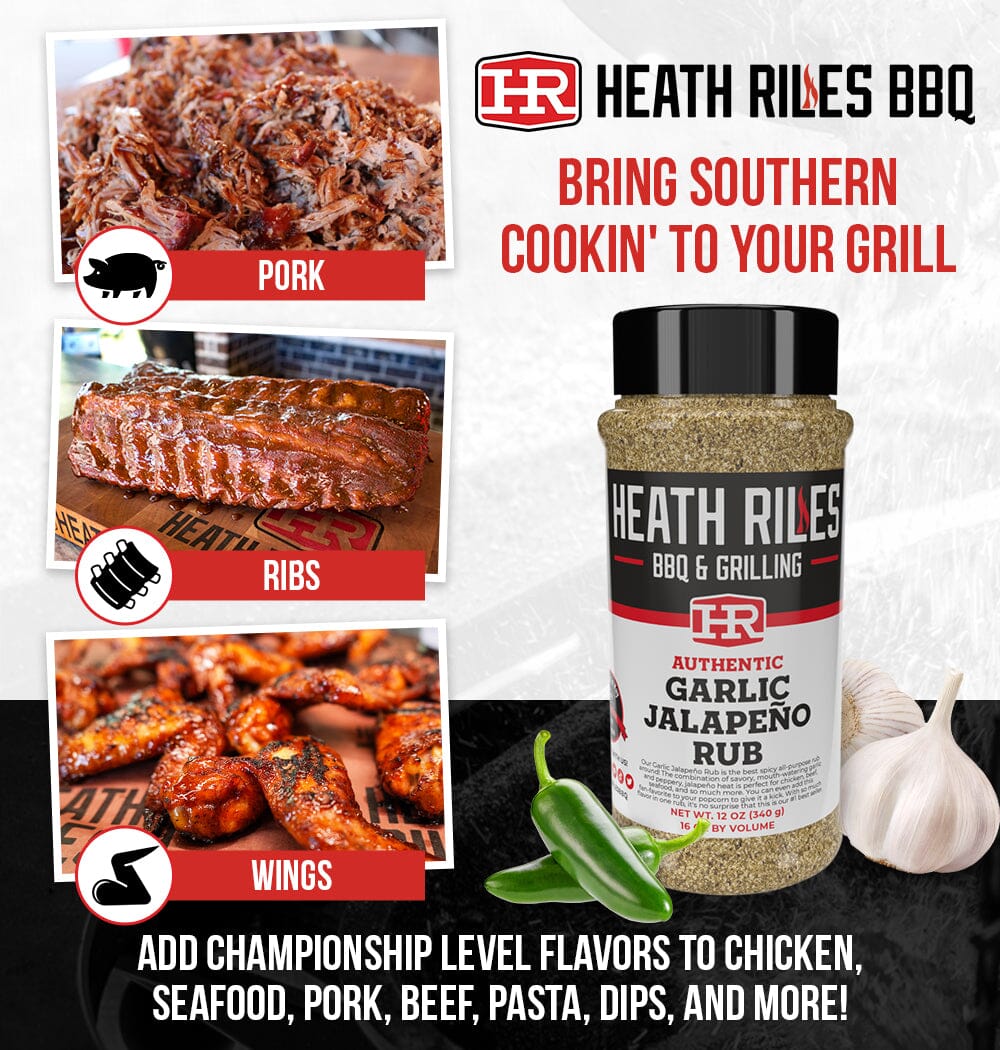
Fire up your pit and season with Heath Riles BBQ.
Chicken Wings FAQs
Q: Why are my smoked chicken wings rubbery?
A: Almost always one of two things: moisture on the skin going into the cook, or a pit temp too low for the fat under the skin to render. Get your wings on a rack in the fridge for at least an hour before the cook, uncovered, and make sure your pit is running hot enough to do its job.
Q: What temp do you smoke chicken wings at for crispy skin?
A: It depends on the cooker. On a drum smoker, 275 to 300°F works well when the wings are fully dry going in. On a pellet grill, 325 to 375°F gives the fat a better chance to render. On a kettle running hot and fast, you can go 400°F and above. The hotter you run, the easier it is to get crispy skin, but you are going to get less smoke flavor the higher you go. That is the tradeoff.
Q: How long do you smoke chicken wings?
A: At 275 to 300°F, plan on 1 to 1.5 hours. At 375 to 400°F, most wings are done in 45 minutes to 1 hour. Whole wings take a few minutes longer than separated flats and drums. Use those as starting points and pull by internal temperature. You are looking for 175 to 185°F.
Q: What internal temp should smoked chicken wings be?
A: Pull at 175 to 185°F. The USDA minimum for poultry is 165°F, but wings at that temperature are often still chewy because the fat has not had time to fully render. Give them a little more time and you will feel the difference when you bite in.
Q: Does cornstarch help with crispy smoked chicken wings?
A: Yes. A tablespoon mixed into your rub before applying picks up leftover surface moisture and helps the rub grab on more evenly. It shows up across several wing cooks on the site including Smoked Wings 2 Ways and Heath's Party Wings on the Weber Kettle.


